
August 2026 · Phoenix Drywall Repair LLC
Texture matching is the part of drywall repair that most homeowners underestimate — and the part that most separates a professional result from an amateur one. Here are the questions we hear most often.
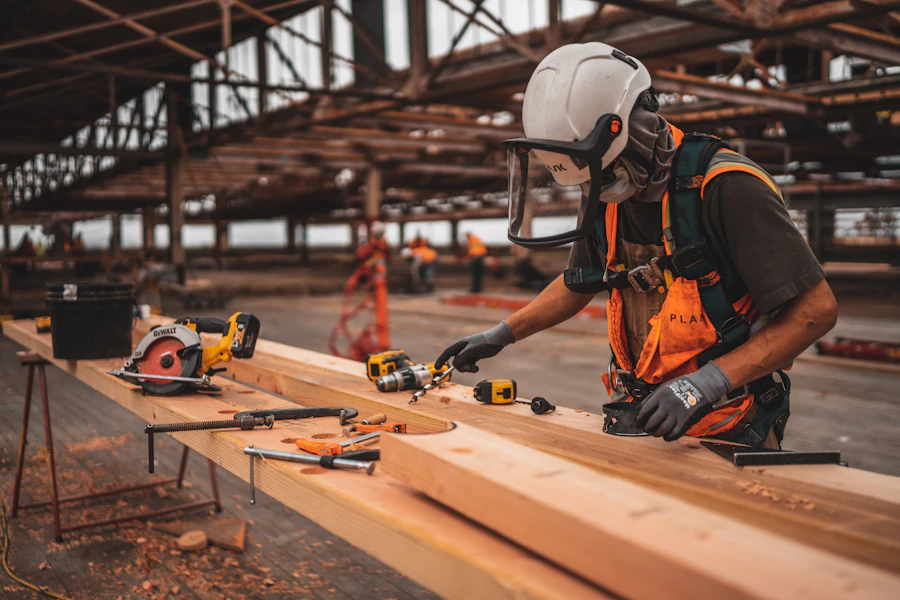
Orange peel is the most common texture in Phoenix homes built after the 1980s. It looks exactly like the skin of an orange — a fine, uniform bumpy surface applied by spraying thinned joint compound through a hopper gun. It's subtle enough that it's easy to miss in overhead lighting, but visible when light hits the wall at an angle.
Knockdown is a heavier, more varied texture. Joint compound is splattered onto the wall (usually with a brush or sprayer), then lightly flattened — "knocked down" — with a trowel before it fully dries. The result is irregular flat patches separated by valleys. It's more dramatic than orange peel and was very common in Phoenix homes built in the 1990s and early 2000s.
Skip trowel is applied by hand using a curved trowel, creating a Mediterranean-style finish with irregular flat islands. It's the most labor-intensive of the three and the hardest to replicate precisely — each skip trowel job is slightly different because it's done by hand.
Knowing which one you have matters because each requires completely different tools, technique, and material consistency to replicate.
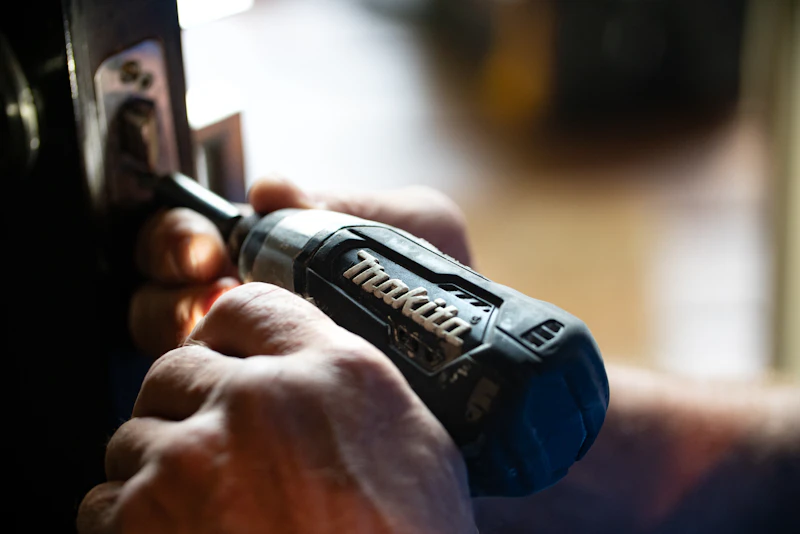
Contractor applying orange peel spray texture to match existing wall finish
A skilled contractor can match texture well enough that the repair is invisible under normal lighting conditions. The key phrase is "normal lighting." Arizona sunlight at a low angle — which you get in every room twice a day — is not normal lighting. It's harsh and raking, and it will show imperfections that overhead lighting hides.
Whether a repair is truly invisible depends on: the contractor's experience with the specific texture type, how large the repair area is (larger is actually easier — more area to blend into), whether the wall was repainted after the repair, and whether the original texture was consistent to begin with.
We can't promise invisible every time. We can promise that we'll be honest with you if a perfect match isn't achievable, and we'll tell you before we start.
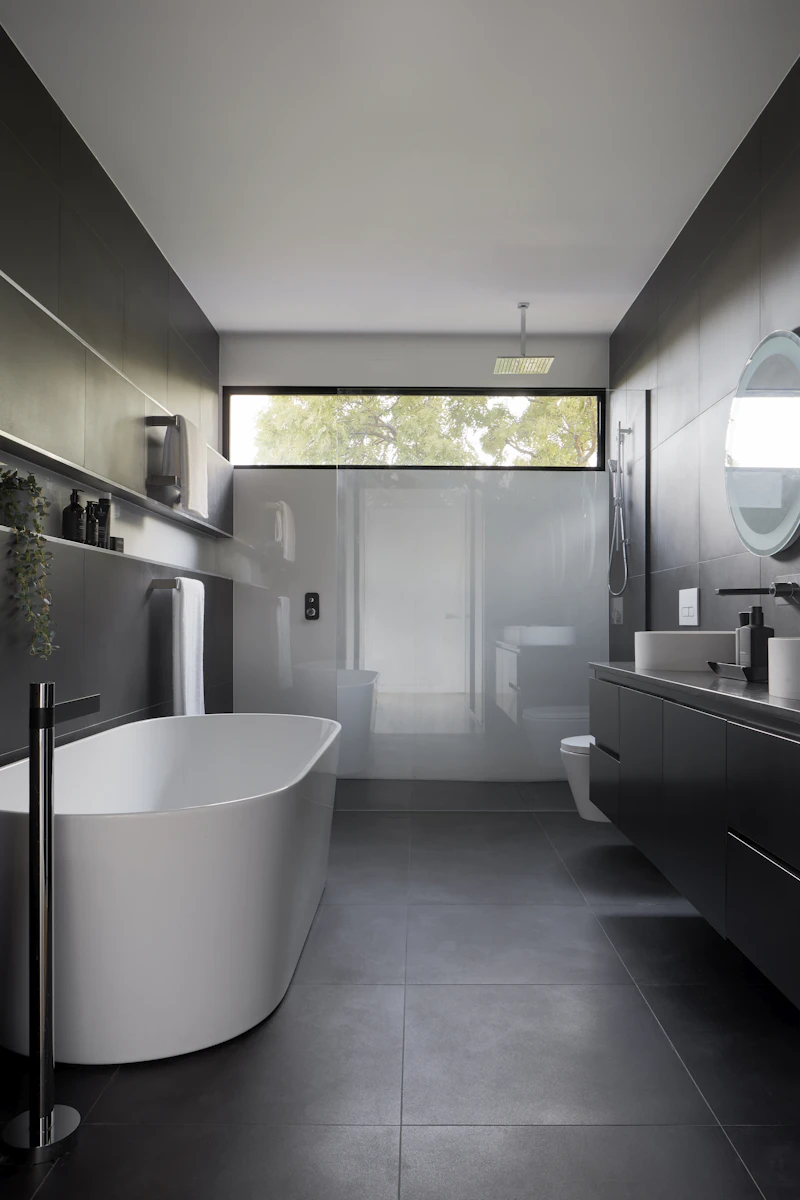
Knockdown texture drywall finish in Phoenix living room
This is the Arizona lighting problem. Overhead incandescent or LED lighting illuminates walls fairly evenly from above, hiding surface variations. Daylight from a window hits the wall at a low angle and rakes across the surface, making every imperfection cast a tiny shadow.
If your repair looks fine under artificial light but visible in daylight, one of two things happened: the texture wasn't matched well enough, or the texture was matched but the mud wasn't feathered far enough into the surrounding area. Both are fixable.
Finished texture-matched wall repair seamlessly blending with surrounding surface
Yes, with one caveat: the texture itself can be matched, but paint is a different story. Twenty years of repainting means the existing texture has multiple layers of paint built up around it, slightly softening the peaks and changing the overall appearance. A freshly applied texture match on raw drywall will look slightly crisper than the surrounding aged texture, at least until it's painted.
The solution is to paint the entire wall (not just the patch) after the repair. This evens out the paint buildup and makes the texture match far less noticeable. If you're only touching up the patch area, some visible difference is almost unavoidable on older walls.
Yes — that's exactly what you're supposed to do. Textured drywall is meant to be painted. The key is using a roller with the right nap thickness. For orange peel, a 3/8-inch nap works well. For heavier knockdown or skip trowel, use 1/2-inch or thicker. A thin nap roller on heavy texture will leave holiday (unpainted valleys), and the result will look patchy.
Also: prime first. Unprimed drywall or skim coat absorbs paint unevenly and can cause flash — areas where the sheen looks different depending on the angle. One coat of primer before paint eliminates this.
Orange peel is dominant in homes built from the 1980s through today. Knockdown is common in homes from the 1990s and early 2000s. Older homes (pre-1980) often have smooth walls, hand-applied texture, or in some cases no texture at all — just painted drywall. Homes built before the mid-1970s may have plaster rather than drywall, which is an entirely different repair process.
Call or text and send photos. We'll tell you exactly what we can do before we come out.
(480) 277-6884 ⚡ Instant Quote →Related: Texture Matching Service · Smooth Wall / Skim Coat · Back to Blog
External resources: USG Finishing Products · Association of the Wall and Ceiling Industry (AWCI)