
September 2026 · Phoenix Drywall Repair LLC

You moved into your new Phoenix home six months ago. The walls were perfect — clean, smooth, freshly painted. Now you're noticing hairline cracks along the ceiling corners, nail heads poking through the paint, and what might be a gap forming above an interior door. Is this normal? Is it a warranty issue? Do you need to call the builder or hire someone yourself?
These are some of the most common questions we get from new construction homeowners throughout the Valley — particularly in fast-growing areas like Queen Creek, Surprise, Peoria, and Gilbert where thousands of homes are built every year. Our drywall repair service handles new construction warranty work and post-warranty repairs throughout the Phoenix metro. Here's what you need to know before you make any calls.

Hairline cracks at ceiling-wall junctions are extremely common in new Phoenix construction — wood framing shrinks as it dries in the desert heat
This isn't a Phoenix-specific problem, but Phoenix makes it significantly worse. The culprit is wood framing moisture content. Lumber is harvested green — meaning it still holds residual moisture when it leaves the mill. Arizona's low humidity dries that lumber out fast, and as it dries, it shrinks. The wood members that hold up the drywall move, and the drywall — which can't move with them — shows the stress as cracks and nail pops.
This shrinkage is most pronounced in the first 12 to 18 months after construction. It's not a sign that the builder did something wrong. It's physics. The International Residential Code and every major production builder warranty acknowledge this reality: some degree of cosmetic cracking in the first year is considered normal, not a defect.
What makes Phoenix particularly prone to this is the combination of extremely low ambient humidity (often below 20% relative humidity in the winter months), high temperature swings between day and night, and the speed of production homebuilding. Framing goes up, drywall goes on, and the home gets painted and closed quickly — before the framing has had a chance to fully acclimate to Arizona's dry conditions. The homeowner then moves in, starts running AC and heat, and the drying-and-shrinking process accelerates.
A secondary contributor in Phoenix is the thermal cycling specific to our climate. Interior walls in an air-conditioned home experience significant daily temperature swings — 72°F inside vs. 110°F outside means a lot of differential expansion through the wall assembly. Over a full summer, this adds up.
Not all new construction drywall issues are the same. Understanding the difference between expected settlement behavior and actual workmanship defects matters — both for deciding how to handle it and for knowing what your builder's warranty covers.
Hairline cracks at ceiling-wall junctions. This is the single most common complaint from new construction homeowners in Phoenix. A thin crack running along the joint where the ceiling meets the wall — sometimes called a "shadow crack" — is almost always caused by framing shrinkage, not bad drywall work. The top plate of a wall shrinks, the ceiling drywall pulls slightly away from the wall drywall, and a gap opens. These are cosmetic and almost universally considered normal settlement, not a warranty defect, though builders will often address them as a goodwill repair at the one-year walkthrough.
Nail pops. Fastener pops occur when drywall screws or nails back out slightly as the framing dries. The head pushes against the compound and paint surface and creates a visible bump or ring. In moderate numbers — a few per room — nail pops are considered normal in the first year. A room with dozens of pops in a uniform pattern may suggest the framing was wetter than typical or the drywall was fastened at too wide a spacing. See our full post on nail pops and drywall repair for the repair process. Most production builders address nail pops at the one-year warranty inspection.
Cracks above door and window openings. A diagonal crack running from the upper corner of a door or window frame at roughly 45 degrees is called a stress crack. In a wood-framed home, a small stress crack (under 1/8 inch wide) in the first year is usually framing settlement. A wider crack, a crack that continues to grow after two years, or one accompanied by a door that won't close properly can indicate a structural issue — header sizing, foundation settlement, or soil movement — and warrants a closer look. This type of crack should be documented and reported to your builder.
Long horizontal cracks mid-wall. A crack running horizontally across a wall panel — not at a joint — is worth paying attention to. If it spans multiple feet and appears on multiple walls, it can indicate ongoing differential settlement, a structural issue, or in rare cases, soil subsidence. Get a second opinion from a structural engineer or home inspector before dismissing these.
Visible joint lines or banding. If you can clearly see the tape seams or butt joints in your drywall through the paint — either as ridges or depressions — this is a finishing quality issue, not settlement. The drywall was not finished to a high enough standard or was painted before the compound was fully cured. This is a legitimate workmanship complaint that should be reported under warranty.
Texture inconsistencies. Orange peel or other spray texture should be uniform across a wall surface. Blotchy areas, visible lap marks, or sections where the texture density changes significantly are finishing defects. If your builder used a different spray pass to touch up an area, the density difference will show under raking light.
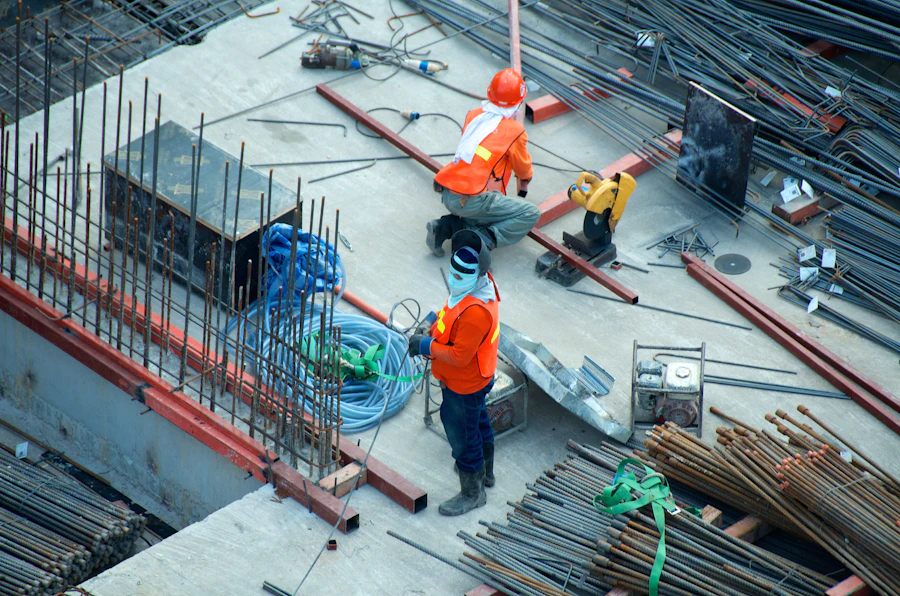
Most production builders conduct a one-year warranty walkthrough — document everything before that appointment
Arizona has a statutory implied warranty for new homes under ARS Title 12, Chapter 8, Article 1 (the Purchaser Dwelling Act). In plain terms, Arizona law provides that a builder warrants new residential construction against construction defects. The definitions matter:
A workmanship defect is a departure from the standard of care that a reasonably competent contractor in the industry would maintain. A design defect involves defective plans or specifications. A material defect is a flaw in the materials used. Cosmetic issues — a hairline crack at a ceiling corner — typically don't meet the legal threshold for a construction defect under Arizona law. Visible tape seams across an entire wall, or texture that doesn't match spec, are more likely to qualify.
Most production builders — DR Horton, Meritage, Taylor Morrison, Lennar, and others active in the Phoenix market — offer their own express warranty on top of the statutory one. A typical structure is: one year for workmanship and materials; two years for mechanical systems (plumbing, HVAC, electrical); ten years for structural defects. Drywall cosmetic issues fall under the one-year workmanship warranty.
The practical implication: if your home is under a year old and you have nail pops, ceiling-corner cracks, and visible tape seams, contact your builder's warranty department before that first anniversary. Most builders conduct a formal one-year warranty walkthrough where they address a punch list of these issues. If you miss that window, you're typically paying out of pocket.
A few important notes on the process:
Not every issue makes the warranty list, and not every builder is responsive. If your builder denies a claim you believe is legitimate, you can file a complaint with the Arizona Registrar of Contractors (ROC). The ROC has jurisdiction over construction defect complaints against licensed contractors, including production homebuilders. The complaint process is free, and the ROC will investigate and can require a builder to remedy legitimate defects.
For issues that fall outside warranty coverage — or for homes that are past the one-year window — we handle these repairs directly. A post-warranty drywall repair job on a new construction home typically involves:
The volume of work on a typical new construction home after one year of settlement is usually a half-day to a full-day job. It's not structurally complicated, but it's detailed — especially the texture match, which needs to blend with the existing spray application across the entire wall.
Most first-year settlement issues in Phoenix stabilize. After 18 to 24 months, the framing has dried out and the majority of the shrinkage-related movement has occurred. New cracks rarely appear after year two in a well-built home. If you're seeing new cracks appearing — especially wide ones, or ones that track diagonally through the wall field rather than at joints — after the two-year mark, that's worth investigating more carefully. It could indicate ongoing foundation movement, poor soil compaction under the slab, or a grading issue that's directing water toward the foundation. An independent home inspector or structural engineer is the right first call in that situation, not a drywall contractor.
For cosmetic settlement cracks and nail pops that have stabilized, the best approach is to address them all at once after they've stopped moving — typically around the 18-to-24-month mark — rather than doing multiple rounds of touch-up repairs as new ones appear. One comprehensive repair visit at that point will hold long-term.

After settlement is complete and repairs are done right, new construction walls look the way they should have from day one
If you're hiring outside the builder warranty for new construction drywall repairs, make sure the contractor you hire is licensed through the Arizona ROC. You can verify any license at roc.az.gov. An unlicensed drywaller doing touch-up work in a home under a structural warranty can complicate future warranty claims.
For texture matching specifically, ask whether the contractor uses the same spray equipment the production builder used. Hand-rolled or brush-applied texture doesn't match machine-sprayed orange peel — the pattern is noticeably different under any raking light. A contractor who shows up with a hand pump sprayer to match production-quality texture is going to leave you with a visible repair.
Read more about what goes into a quality repair on our texture matching page, and see the drywall finishing levels guide to understand what standard your builder should have hit in the first place.
Call, text, or use our instant quote tool. We answer questions directly — no runaround.
(480) 277-6884 ⚡ Instant Quote →Related: Drywall Repair Phoenix · Texture Matching · Back to Blog
External resources: Verify a License — AZ ROC · File a Complaint — AZ ROC · Arizona Purchaser Dwelling Act (ARS 12-1361)